01
Licensing Cost Review
As an IT services organization operating on defined margins, DCC targeted a structural reduction in recurring infrastructure licensing to protect profitability at its next renewal cycle.
Data Consultants Corporation — US-Based IT Services Organization
To protect its operational margins ahead of a licensing renewal, DCC elected to consolidate onto Proxmox VE. ISPL — a Proxmox Silver Partner — re-platformed a live hyper-converged cluster from vSphere with vSAN to Proxmox VE with Ceph using a phased node-liberation strategy, on existing hardware, with downtime kept well below the 24-hour ceiling.
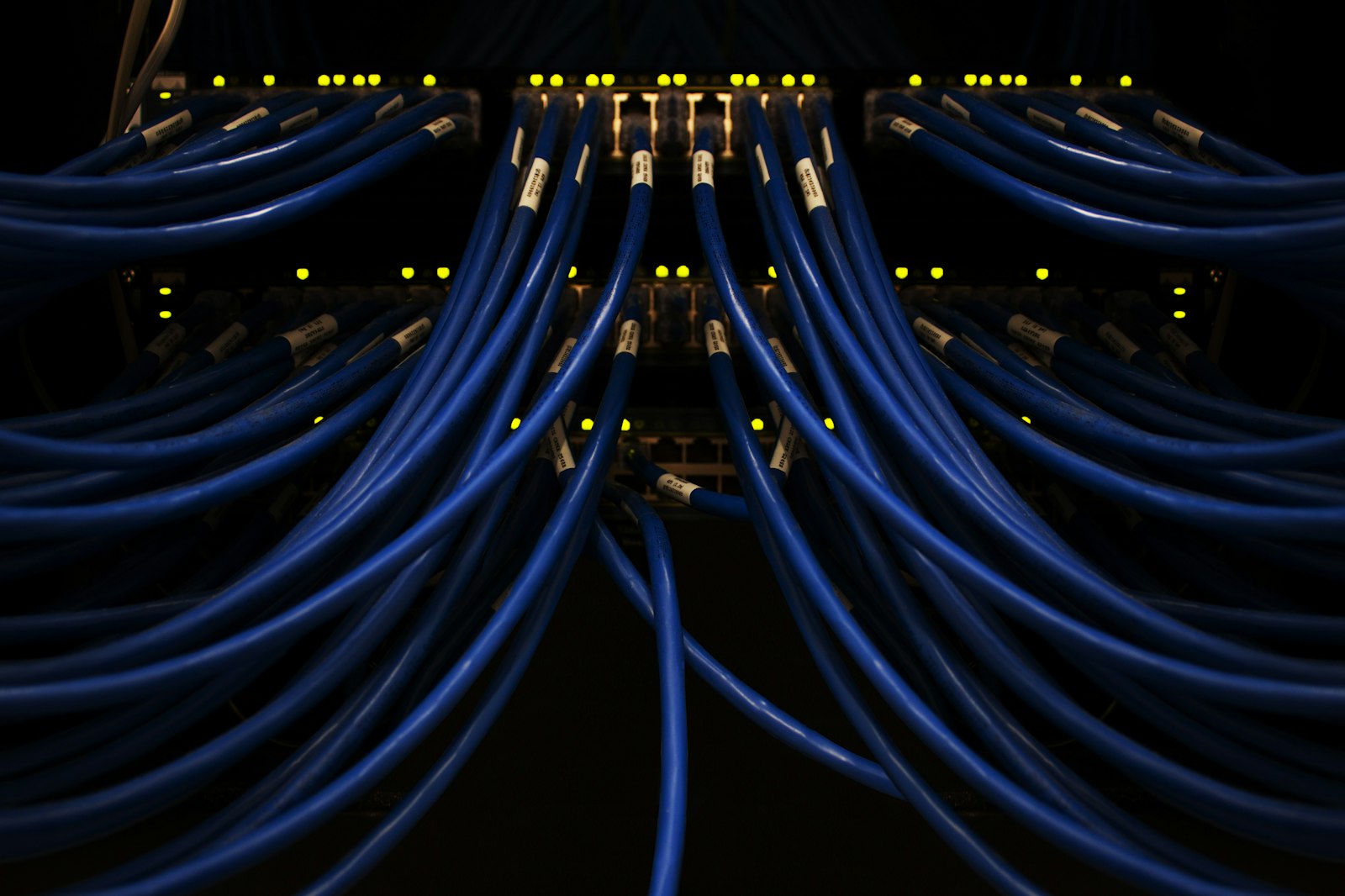
Data Consultants Corporation (DCC), a US-based IT services organization, had built its virtualization infrastructure on VMware vSphere with vSAN — multiple physical host nodes interconnected through a pair of high-throughput 25G storage switches, forming a robust hyper-converged cluster. VM backups were managed through Veeam Backup & Replication for reliable on-site data protection.
As an IT services company, DCC's infrastructure is not just an internal support function — it is the operational backbone on which client-facing services and internal workloads run. Performance, availability and data integrity were business-critical requirements, not merely IT concerns.
In 2024, DCC's VMware licensing model moved to a subscription basis, prompting a review of its virtualization platform strategy. DCC's leadership decided to consolidate onto Proxmox VE — without new hardware, and without exceeding a 24-hour downtime threshold per application.
As an IT services organization operating on defined margins, DCC targeted a structural reduction in recurring infrastructure licensing to protect profitability at its next renewal cycle.
Beyond immediate cost, leadership recognized a deeper risk — continued dependence on a single vendor whose pricing and licensing policies were now subject to change without predictable roadmaps, exposing DCC to further escalations outside its control.
Hosted applications actively served business functions. Any approach had to respect a maximum tolerable downtime of 24 hours per workload. A big-bang cutover — shutting everything down and rebuilding — was technically possible but carried unacceptable operational risk.
Leadership made a clear commercial decision: the migration had to execute entirely on existing hardware. Procuring new servers or storage was off the table — requiring a phased, surgical approach with no parallel hardware environment to fall back on.
The existing Veeam Backup & Replication setup was tied to the VMware ecosystem. Retaining it post-migration meant carrying forward a licensing cost with limited justification — a replacement natively integrated with the new platform was required.
Proxmox VE — open-source, built on KVM and LXC with a mature web UI and commercial support — was paired with Ceph as the distributed storage backend for its functional equivalence to vSAN: redundant, self-healing, hyper-converged storage with no proprietary array dependency.
Existing drives within each host were re-tasked deliberately: SSDs designated as Ceph OSDs (the primary storage tier), while NVMe drives were allocated to Ceph's DB and WAL functions — accelerating metadata operations and write throughput from hardware already in place.
With no spare hardware, the core challenge was bootstrapping a PVE cluster from nodes still active in the vSAN cluster. Spare drives created temporary local datastores; VMs were shifted off the vSAN pool to free nodes, which were withdrawn one set at a time and re-provisioned as Proxmox VE — repeated iteratively.
Rather than treating the 24-hour window as a target, ISPL treated it as a ceiling. Proxmox VE's built-in ESXi-to-PVE migration tool converted and transferred VMs with disruption kept as brief as technically feasible — far below the agreed threshold.
PBS — integrating natively with Proxmox VE, supporting incremental backups, deduplication and integrity verification — replaced Veeam. Storage drives from the decommissioned Veeam infrastructure were repurposed as the PBS datastore, with encryption at rest and a defined retention policy.
ISPL executed the migration as a structured sequence — each phase designed to maintain cluster stability, protect live workloads, and progressively transfer the infrastructure from VMware to Proxmox VE, all on DCC's existing hardware.
ISPL inventoried all hosted VMs, mapped resource profiles and application dependencies, and identified workload criticality with DCC's stakeholders. ESXi hosts carrying a lighter VM load were flagged as first-wave liberation candidates; spare drives in other hosts were mapped as local datastore capacity.
Three ESXi hosts running comparatively fewer VMs were selected. Their VMs were migrated to other ESXi hosts, which used spare NVMe/SSD drives to provision local datastores outside the vSAN pool. Once relocated, the three target hosts were fully free of workloads and ready for controlled evacuation.
For each emptied host: placed into maintenance mode with vSAN data migration policy set to 'Full Data Migration' — redistributing all hosted data across remaining cluster members. The cluster was monitored until all vSAN objects resynced and health returned to fully healthy, then the node was formally removed from vCenter (VCSA).
The three evacuated nodes were provisioned as a Proxmox VE cluster. Ceph was configured: SSDs as OSDs forming the primary storage tier, NVMe drives hosting Ceph's DB and WAL components to accelerate OSD performance. The Ceph cluster was validated for health, redundancy and performance before any production workloads.
Using the built-in ESXi-to-PVE tool, VMs on local datastores (no vSAN dependency) were migrated first. The hosts freed by that became the next liberation candidates — their vSAN-backed VMs redistributed, then evacuated and joined to the growing PVE + Ceph cluster. This migrate → evacuate → expand cycle repeated until all nodes were absorbed.
With all nodes evacuated and all VMs migrated, a comprehensive verification confirmed each workload's operational status with application stakeholders. Only after sign-off were vCenter Server (VCSA) and all ESXi host licenses formally decommissioned.
Proxmox Backup Server was deployed on storage drives repurposed from the Veeam environment: encryption at rest for all backup data, a defined retention policy, and integration with the PVE cluster for scheduled incremental backups with deduplication. After backup/restore validation, Veeam was decommissioned.
Recurring hypervisor licensing spend structurally reduced — an ongoing financial gain, not a one-time saving.
Individual workloads experienced only minimal disruption, far below the agreed 24-hour ceiling.
Executed on DCC's existing server and storage fleet; spare and Veeam drives repurposed as Ceph and PBS tiers.
Every ESXi node re-provisioned as Proxmox VE; all VMs migrated to the new PVE + Ceph cluster.
The phased node-liberation strategy, the disciplined vSAN evacuation, and the iterative migrate-evacuate-expand approach were all products of deep familiarity with both the VMware and Proxmox ecosystems — enabling a migration that was safe, efficient, and commercially sound.
About Illumia Solutions — As a Proxmox Silver Partner, ISPL pairs hands-on execution capability with platform-specific expertise, delivering vendor-independent infrastructure foundations that scale with the business — without proprietary licensing surprises.