Case Study

From Bare Metal to a Two-Cluster Proxmox HCI Estate

Lifebank Foundation Inc. — Non-Profit Microfinance, Philippines

ISPL led a progressive, open-source modernisation for Lifebank's 5,000+ employees — first consolidating fragmented bare-metal servers onto a Proxmox HCI cluster with Ceph storage and PBS, then adding a dedicated NVMe/SSD cluster for high-IOPS workloads. The result: 50+ VMs across two clusters, IOPS-driven interruptions cut to zero, and a fully managed open-source stack.

Proxmox VECeph HCINVMe ClusterProxmox Backup ServerManaged ServicesNon-Profit
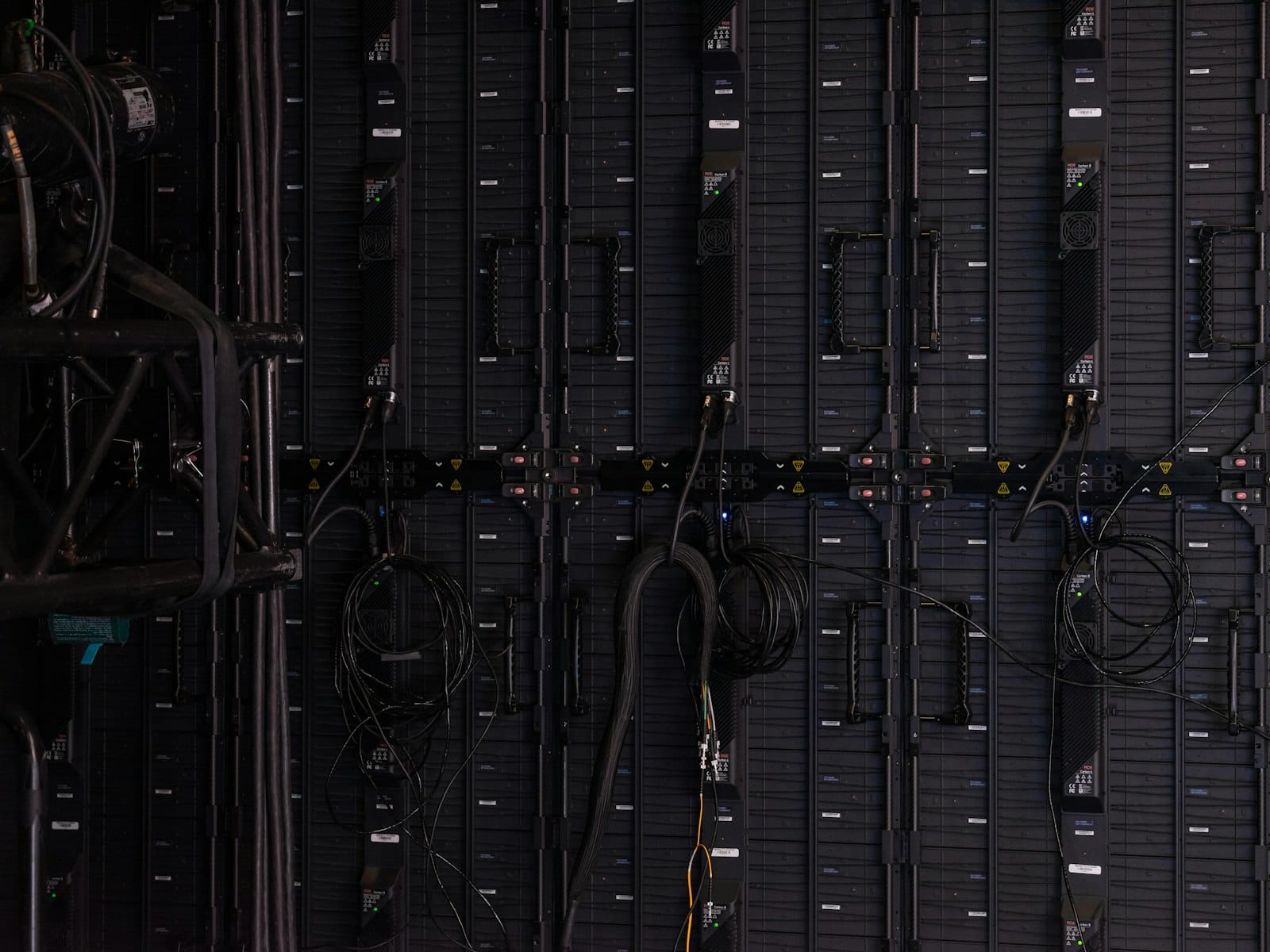
Hyper-converged data center server racks
Scroll
At A Glance

The transformation, in numbers.

50+
VMs Across Two HCI Clusters
Zero
IOPS-Driven Interruptions
5,000+
Employees Served
24/7
AMC & Managed Services
Background

A two-stage evolution toward a modern open-source platform.

Lifebank Foundation Inc., a large non-profit microfinance organisation in the Philippines, employs more than 5,000 staff and serves a far larger beneficiary base. Its digital portfolio spans email, cloud storage, ERP, LMS, data science workloads, web meeting services and a full security and monitoring stack — NMS, SIEM, antivirus, log analysis and configuration backup.

Before engaging ISPL, those core services ran on a set of dedicated bare-metal servers — each major application hosted on its own physical box with limited resources and no virtualization layer. As more services were added, operational complexity climbed and high availability and consistent backup grew hard to maintain.

ISPL designed a progressive, open-source modernisation in two stages: first, consolidating fragmented bare-metal servers onto a Proxmox HCI cluster with Ceph storage and Proxmox Backup Server; then, as workloads grew increasingly I/O-intensive over four years, adding a dedicated NVMe/SSD high-performance cluster and selectively migrating critical high-IOPS workloads — with weekend cutovers to avoid business-hours downtime.
The Challenges

Two successive sets of pressures across the journey.

01

Fragmented Bare-Metal Servers

Each major application — email, cloud storage, web meetings — ran on its own dedicated physical server with limited CPU, memory and HDD resources and no virtualization layer. Capacity could not be shared, and recovery from hardware failure was slow.

02

No High Availability or Consolidation

With siloed servers, there was no built-in HA across workloads and no way to pool compute and storage — leaving stranded capacity and isolated bottlenecks as operational complexity grew with every new service.

03

Inconsistent Backup & Recovery

A standardised backup and recovery approach was needed to protect all virtualised workloads — not just a subset — as Lifebank scaled to support its 5,000+ employees and internal users across email, collaboration and learning.

04

Emerging High-IOPS Demand

After the first HCI migration, ERP, LMS, data science and expanded security tooling were onboarded. Over years, mail, file and analytical workloads turned increasingly I/O-intensive, pushing the limits of the original HDD/SSD cluster's storage performance.

05

User Experience & Continuity Risk

IOPS-hungry workloads experienced latency and throughput constraints during peak usage, with occasional performance-related interruptions — even as the broader estate stayed stable. Productivity for critical services had to be protected.

06

Growth Without Rip-and-Replace

Lifebank wanted to add capacity, not discard the original HCI investment. The HDD/SSD cluster still had an important role; a high-performance tier was needed alongside it, with weekend cutovers and a continued open-source, no-lock-in strategy.

Solution Proposed

A progressive, open-source operating model — built to scale.

  • 1
    Open-Source HCI as the Core Platform

    A Proxmox-based hyperconverged infrastructure standardised compute, storage and backup on open source: Proxmox VE for clustering and HA, Ceph distributed storage on HDD/SSD drives, and an end-to-end open stack (mail, cloud, web meeting, NMS, SIEM) keeping licensing exposure under control.

  • 2
    Bare-Metal to HCI Consolidation

    The first stage migrated Lifebank's core services off dedicated bare-metal servers and onto the Proxmox HCI platform — centralising workloads, enabling scale-out capacity and HA, and establishing a single resilient virtualised foundation.

  • 3
    Progressive HCI Expansion, Not Rip-and-Replace

    Rather than replacing the original cluster, ISPL designed a progressive expansion: the HDD/SSD cluster stays in production for suitable workloads, while a new NVMe/SSD cluster handles high-IOPS demand — both integrated under shared backup, monitoring and logging as one logical estate.

  • 4
    Dedicated NVMe/SSD Cluster for High-IOPS

    A new NVMe and SSD-based HCI cluster at the central office delivered substantially higher IOPS and lower latency — increasing high-IOPS capacity by several times. Critical applications were selected from monitoring data and user experience, then migrated to free resources on the original platform.

  • 5
    Unified Backup & Data Protection with PBS

    Proxmox Backup Server protected both clusters: daily image-level VM backups to an on-site PBS node, replication to an off-site PBS node for DR, quarterly restore drills to validate recoverability, and backup monitoring folded into the broader operations stack.

  • 6
    Comprehensive AMC & Managed Services

    From commissioning onward, ISPL ran operations and maintenance of both clusters and HCI networking, VM lifecycle management, monitoring and security, administration of key apps, and regular VAPT/WAPT assessments — translating the design into sustained performance and reliability.

Implementation

Six phases, staged for stability and continuity.

ISPL executed the modernisation through a staged implementation — each step validated before the next, and all high-IOPS cutovers scheduled within weekend windows to avoid business-hours downtime.

01

Transition from Bare Metal to HCI

ISPL assessed the existing bare-metal servers hosting email, cloud and web meeting services, designed and commissioned the initial Proxmox VE + Ceph HDD/SSD cluster, migrated services from dedicated physical servers into VMs, and validated performance, availability and functionality with application owners.

02

Unified Backup & Operations

With the bare-metal to HCI migration complete and stable, ISPL deployed Proxmox Backup Server as the backbone of VM protection — daily on-site backups with off-site replication — and set up monitoring, logging and security tooling, onboarding AMC and managed services across the stack.

03

Performance Monitoring & High-IOPS Identification

Over several years of growth, ISPL continuously analysed resource usage and I/O patterns across VMs, identified IOPS-intensive and latency-sensitive workloads — specific mail, file and analytical applications — and correlated monitoring data with user feedback to confirm which services were most impacted.

04

Deployment of the NVMe/SSD High-Performance Cluster

In response to observed IOPS starvation and growth, ISPL designed and commissioned a new NVMe/SSD HCI cluster at the central office, integrated it with existing backup, logging and monitoring so both clusters run as one estate, and configured high-speed dedicated storage networking. The cluster was validated before any production workloads moved.

05

Migration of Selected High-IOPS Workloads

ISPL selected target VMs from monitoring data and user-experience impact, then executed controlled cutovers during weekend windows to avoid business-hours downtime — migrating selected VMs from the original cluster to the NVMe/SSD cluster and validating performance improvements with application owners.

06

Continuous Operations, Optimisation & Assurance

Under ongoing AMC, ISPL monitors both clusters and key applications, runs regular capacity reviews, performs quarterly backup/restore drills and periodic VAPT/WAPT assessments, and continuously tunes workloads across the two clusters to balance performance, resilience and resource utilisation.

Before vs. After

From siloed servers to a resilient two-cluster estate.

Before
  • Siloed bare-metal servers — one application per physical host
  • Limited ability to pool compute and storage resources
  • No built-in high availability across workloads
  • Inconsistent backup, protecting only a subset of services
  • High-IOPS workloads hitting storage performance limits
  • Occasional performance-related interruptions at peak usage
After
  • Two-cluster Proxmox HCI estate hosting 50+ VMs
  • Core services consolidated from bare metal into virtual machines
  • Dedicated NVMe/SSD tier — high-IOPS capacity up several times
  • IOPS-driven interruptions dropped from frequent to zero
  • Daily on-site PBS backups with off-site replication and restore drills
  • Fully open-source stack — no proprietary licensing lock-in
Outcomes

Measurable gains across performance, resilience and cost.

50+

VMs Consolidated

A unified, virtualised infrastructure across two production HCI clusters, replacing fragmented bare-metal servers.

Several×

High-IOPS Capacity

High-IOPS capacity increased several times over the original cluster after the NVMe deployment.

0

IOPS Interruptions

Unplanned interruptions for IOPS-hungry applications dropped from frequent incidents to zero.

On/Off-site

Data Protection

Daily PBS backups with off-site replication, validated by quarterly restore drills and periodic VAPT/WAPT.

A reference model for non-profit and microfinance organisations: start by consolidating onto an open-source HCI core, then progressively add high-performance capacity and operational maturity as workloads grow — rather than attempting disruptive rip-and-replace projects.

About Illumia Solutions — ISPL combines open-source HCI engineering with end-to-end managed services — HCI operations and networking, VM lifecycle, monitoring, security and key application administration — so the savings and performance keep compounding over time.